
Java Edition
Java allows any item to be held in the offhand; only items with a supported use action can be activated from that slot.
Edition comparison
Java Edition lets the offhand hold any inventory item, while Bedrock Edition limits ordinary offhand placement and use to a smaller supported set. This changes combat controls, building workflows and command behavior.
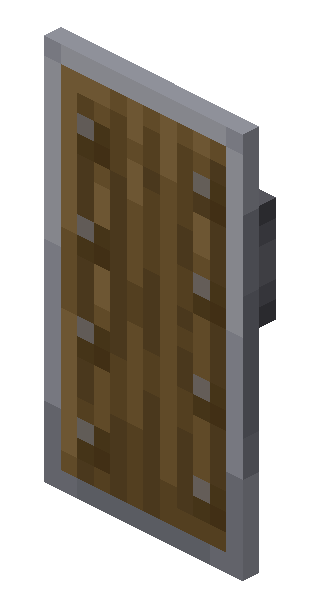 Java vs Bedrock: Offhand
Java allows any item to be held in the offhand; only items with a supported use action can be activated from that slot.
The offhand slot has narrower use, principally shields, maps and selected items.
| Feature | Java Edition | Bedrock Edition | Why it matters |
|---|---|---|---|
| What can be placed | Players can manually place any item stack in the offhand slot. | Normal gameplay permits only supported offhand items, with maps, shields and selected utility items forming the main set. | A Java hotbar/offhand workflow may have no direct Bedrock equivalent. |
| Using the item | The use key can activate the offhand item when the main hand does not take priority. | Supported offhand items follow Bedrock input and item-use rules. | Food, blocks and tools placed offhand in Java cannot be assumed usable in Bedrock. |
| Shield control | Hold the use control to raise a shield in either hand. | Shield activation depends on Bedrock controls and commonly ties to sneaking or the platform's use action. | Combat tutorials must match the player's platform and control scheme. |
| Commands and data | Commands and item components can place broader item stacks in equipment slots. | Bedrock commands use their own slot names, components and restrictions. | Command examples for equipping entities are edition-specific. |
Choose a design, command or workflow explicitly tested for your edition; offhand behaviour is not always portable.